
Best Online Slots for Maryland Players
Maryland runs six of the busiest casino floors on the East Coast, legalized online sports betting back in 2021 and collects hundreds of millions of dollars in gaming taxes every quarter. Yet if you want to spin a real money slot from your couch in Baltimore, Silver Spring or Ocean City, the state gives you nothing to log into. There is no Maryland-licensed online casino, no regulated slot app tied to the Maryland Lottery, and after another failed push in the 2026 legislative session, there will not be one for a while.
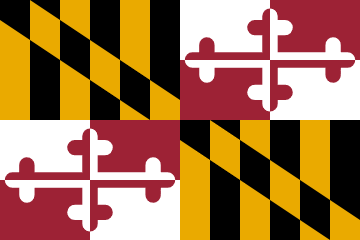
This guide lays out exactly where things stand: why the law reads the way it does, what the offshore operators willing to register a Maryland address actually offer (and what they cannot promise you), where the nearest regulated slot machines physically sit, and how the free and social options fit in. For slot coverage across every state, our home base is USA online slots. Everything below is specific to the Old Line State.
The Short Answer on Legality in Maryland
No. Spinning a slot for cash over the internet is neither legal nor regulated in Maryland as of July 2026. The Maryland Lottery and Gaming Control Agency licenses six land-based casinos and a stable of online sportsbooks, but its authority stops there. There is no legal framework, no license category and no consumer-protection regime for internet casino gaming, which is the bucket that online slots fall into. Browse our full guide to online slots by state.
That does not mean Marylanders cannot find a spinning reel online. Dozens of offshore casinos, licensed in places like Panama, Curacao and Costa Rica, accept sign-ups from Maryland addresses. They operate in a legal gray zone: they are not authorized by Maryland, and the state offers you no recourse if a payout is denied or a term is changed after the fact. I will get into the specifics, but the headline is worth stating plainly up front. Anything you play online for real money from inside Maryland today is happening outside the state’s regulatory umbrella.
How Maryland Ties Gambling to the Ballot Box
Maryland is unusual in that its constitution, not just a committee vote, governs how gambling expands. Since the 2008 amendment that first authorized slot machines, any major expansion of commercial gaming has to be approved by voters in a statewide referendum during a general election. That single requirement shapes every online casino debate in Annapolis and explains why the issue keeps stalling.
To legalize online slots, lawmakers cannot simply pass a bill. They have to pass two things in the same session: a measure putting the question on the November ballot, and a companion implementation bill spelling out licenses, taxes and rules for if voters say yes. Miss either half and the effort dies.
State Senator Ron Watson, a Prince George’s County Democrat, has carried this torch since 2023 without a win. His 2026 attempt paired Senate Bill 761, the referendum measure aimed at the November 2026 ballot, with Senate Bill 885, the regulatory framework. The Senate Budget and Taxation Committee canceled the hearing on SB 761, and Watson withdrew it on March 13, 2026. SB 885 got a hearing but never cleared committee before the Crossover Day cutoff. A separate 2025 iGaming bill had died the same way the year before.
The proposed money model is worth understanding because it tells you what a legal Maryland product might one day look like. Rather than a flat tax rate, SB 885 used a revenue-sharing structure: operators would have kept roughly 80 percent of live-dealer game revenue and about 60 percent of revenue from other online games, with the balance flowing to regulation, problem-gambling programs and education funding. Supporters pitched online casinos largely as a new revenue stream for schools.
There is a reason the money keeps drawing lawmakers back. Maryland’s six casinos already send a meaningful slice of their slot revenue to the state’s Education Trust Fund, and the pitch for online slots has always been that the internet could add a new stream on top without building anything physical. Neighboring states sharpen that argument. Pennsylvania, New Jersey and West Virginia all run regulated online casinos, and every Maryland border town within a short drive of one of those markets is a reminder of tax dollars and player spending leaking across state lines. Supporters frame legalization as recapturing money Marylanders are already spending elsewhere, whether at a regulated site over the border or an offshore one online.
The state’s history at the ballot box shows how literal that voter-control rule is. The 2008 measure, Question 2, cracked the door open by permitting up to 15,000 slot machines spread across five sites. Four years later, Question 7 in the 2012 election widened it again, authorizing live table games and clearing the way for the sixth license that became MGM National Harbor, and it passed statewide only after a bruising, expensive campaign. Each of those steps needed a separate trip to the voters, which is exactly the hurdle an online-slots question would face. There is no shortcut in Maryland, no path where the legislature quietly authorizes a new form of gambling on its own. That structural reality, more than any single lawmaker’s appetite, is why internet casino play keeps hitting a wall in Annapolis.
The tax structure on the physical machines also colors the debate. Maryland taxes video lottery terminal revenue at some of the steeper rates in the country, with the share sent to the state varying by property but reaching well above half of slot proceeds at several casinos, and a large piece of that money is earmarked for the Education Trust Fund. Live table games are taxed far more lightly than the machines. Backers of online slots argue an internet channel could feed that same education pipeline, while the casino operators counter that a dollar wagered on a phone is often a dollar not spent on a taxed slot floor, which is the core of the cannibalization fear driving opposition.
Politics, not just process, is the obstacle. An October 2025 poll found that about 71 percent of Maryland voters opposed legalizing iGaming, and the state’s brick-and-mortar casino operators and their labor unions have warned that online play cannibalizes in-person visits and the jobs attached to them. With opposition that steep and a referendum requirement that hands the final call to voters, the practical outlook is that Maryland online slots stay shelved until at least the next legislative session, and quite possibly longer. Anyone telling you a launch date is guessing.
Offshore Slot Sites Maryland Players Actually Use
Because there is no in-state option, the real money slots Marylanders play online come from offshore operators. Read this before the reviews: these sites are not licensed by Maryland, not regulated by the Maryland Lottery and Gaming Control Agency, and not covered by any Maryland consumer-protection law. If a dispute arises, you are relying on a foreign licensing body and the operator’s own goodwill, not the state. Most run on cryptocurrency rails to move money in and out, and payout speed, bonus terms and game fairness vary widely. I review five of them below in detail, then account for the wider field without running through a roster of brand names. Treat all of it as information, not a recommendation to gamble.
All Online Slots Sites Accepting Maryland Players
Offshore · 18+ · 9 sites accepting MD players| # | Casino | Rating | Welcome Offer | Available | Play / Review |
|---|---|---|---|---|---|
| 1 | BetOnline | ★★★★½4.6 | 100% up to $3,000 | Accepts MD | Play Review |
| 2 | Super Slots | ★★★★½4.5 | Up to $6,000 | Accepts MD | Play Review |
| 3 | Wild Casino | ★★★★4.3 | $9,000 crypto package | Accepts MD | Play Review |
| 4 | MyBookie | ★★★★4.1 | 150% up to $750 | Accepts MD | Play Review |
| 5 | BetUS | ★★★★4.0 | 125% up to $3,125 | Accepts MD | Review |
| 6 | CasinoMax | ★★★★4.0 | 325% up to $9,750 | Accepts MD | Play Review |
| 7 | Roaring 21 | ★★★½3.9 | Up to $10,000 | Accepts MD | Play Review |
| 8 | Cherry Jackpot | ★★★½3.8 | 200% welcome | Accepts MD | Review |
| 9 | Slots Ninja | ★★★½3.8 | 250% welcome | Accepts MD | Review |
Funding an offshore slots account: these sites run on crypto and cards. See our guides to crypto deposits, Bitcoin, credit cards and MatchPay, compare every method on the banking hub, or check the fastest paying options.
BetOnline has been taking wagers online for more than two decades, which puts it among the longest-running operators still willing to open accounts for Maryland residents, with a catalog that has grown past the 1,900-title mark. Its welcome incentive centers on free spins that carry no playthrough attached and arrive in daily portions across your opening 10 days, a structure that rewards players who like to trickle through new slots rather than blow through a single lump. Because the betting side and the reels draw on the same balance, a Marylander who already puts money on games can shift it to slots without a separate transfer. Think of it as an all-purpose book that happens to run slots, with the sports-to-casino overlap as its main selling point.
Roughly 1,490 titles make Super Slots one of the larger catalogs an offshore site pushes at Maryland players, and the name is not accidental. Its promotional calendar is heavy on daily free spins and no-wager spin drops, and the live-dealer floor is deep for an offshore operator, with multiple blackjack, roulette and baccarat tables running. If your priority is sheer breadth of slots plus frequent spin bonuses, this is the volume play. As with every site in this section, the trade-off is that none of that volume comes with Maryland oversight.
Wild Casino’s calling card is variety across providers, and it pairs that with American-style live-dealer rooms that run two-camera setups meant to feel closer to a Vegas pit. One handy quirk: on its Betsoft games the theoretical return is spelled out inside the help screens, so a Maryland player can read the payback percentage before staking a dollar, something offshore sites disclose far less often than they ought to. Banking is crypto-forward. The look is polished and the game count is broad without being overwhelming.
If you like traditional, straightforward slots rather than feature-stuffed video reels, CasinoMax is built on RealTime Gaming and leans into classic titles, several of which carry higher-than-average return percentages. Match bonuses and free-spin offers land often, so the value is in the steady promo drip rather than one blockbuster welcome package. It is a narrower, more old-school experience than the big generalist books, and that focus is the appeal for players who want reels without the sportsbook and live-casino sprawl attached.
Roaring 21 is another casino powered by RealTime Gaming software, and it competes mainly on the size of its percentage-match welcome bonuses, which are among the headline-grabbing offers in the offshore field. The eye-catching match number comes with the usual catch that any big-percentage bonus does: substantial wagering requirements that determine whether the money is ever really yours. Read the terms before the marketing. The game selection is RTG-standard, so the deposit bonus, not the library, is the reason players land here.
The other offshore brands that will open an account for a Maryland resident go unnamed here because none has been through the same hands-on testing. They range from crypto-only newcomers to long-running books with a casino tab bolted on, but the important point is what they share rather than how they differ: every one of them operates on a foreign license, answers to no Maryland regulator, and asks you to trust its own house rules if a payout ever goes sideways. The five I did review are not endorsements so much as the ones I could actually examine, and the unreviewed remainder carries the identical risk profile.
Playing Slots on Your Phone in Maryland
The single most useful thing to understand about slots on a Maryland phone is the difference between a downloadable program and a website dressed up to fill your screen. In states that have licensed internet casinos, an operator can publish a true native app, a piece of software that installs, sits on your device and talks directly to a regulated back end. Maryland has authorized nothing of the kind, so no offshore slot brand can distribute a genuine casino app to a phone registered here. What they offer instead is their ordinary website, engineered to reflow into a phone-sized layout when you visit it in a browser. It behaves like an app and looks like one, but nothing installs, and every session runs through the same web page a desktop visitor would see.
That distinction carries a couple of practical consequences a Maryland player should weigh. A browser-based slot lobby depends entirely on your connection, so a weak signal shows up as stutter far more than it would on installed software, and live-dealer video in particular will chew through a cellular data plan, which makes a solid Wi-Fi network the sensible default. Funding is the other wrinkle: because these operators lean on cryptocurrency to move money, topping up or cashing out from your phone generally means shuttling Bitcoin, a stablecoin or similar through a wallet app rather than tapping a stored debit card, and that is a real hurdle for anyone who has never touched crypto before.
The flip side is what a Maryland phone genuinely can install. Free-to-play and sweepstakes titles, discussed just below, are distributed as ordinary consumer apps, and the state’s licensed sports betting apps install and run normally too. Neither category delivers real money reels, though: the sports apps are barred from offering casino games and the free titles pay nothing out in cash, because Maryland has never opened the door to regulated online slots in the first place.
Where Tribal Gaming Fits in Maryland
It does not, and that is worth being precise about because tribal compacts drive online and land-based gaming in many other states. No federally recognized tribe runs a casino in Maryland, no tribal-state compact of the sort authorized under the federal Indian Gaming Regulatory Act of 1988 exists here, and so the state has neither tribal casinos nor tribal online slots. The Piscataway peoples hold state recognition in Maryland, but state recognition does not confer the federal status that would open the door to compacted casino gaming.
The practical takeaway: every legal slot machine in Maryland is a commercial video lottery terminal operated under the state’s six-casino program, not a tribal machine. When you read about tribal gaming shaping online slots elsewhere, none of that machinery exists here. Do not let any offshore marketing suggest a tribal angle makes their site legal in Maryland, because there is no tribal gaming framework in the state to point to.
Maryland’s Six Casinos, Where the Real Machines Are
If you want a regulated, audited slot machine in Maryland, it lives on one of six casino floors. These are the state’s video lottery terminal operators, overseen by the Maryland Lottery and Gaming Control Agency, and collectively they generate roughly 160 million dollars in gaming revenue in a typical month. The figures below are ballpark numbers rather than fixed totals, since each property adds and pulls machines as it rearranges its floor, but they map the relative scale of the six rooms accurately enough.
Live! Casino and Hotel, Hanover
The largest slot floor in the state sits in Anne Arundel County near Arundel Mills mall, with roughly 3,700 to 3,900 machines depending on the month. Its scale, proximity to Baltimore and Washington, and attached hotel make it the volume leader, and the range of denominations runs from penny video slots to high-limit rooms.
MGM National Harbor, Oxon Hill
Perched on the Potomac just outside Washington, MGM National Harbor carries in the neighborhood of 2,270 to 2,300 slot machines alongside a large table-games pit, and it is consistently the top single-property revenue earner in Maryland. The resort-style setting, restaurants and theater make it as much a destination as a casino.
Horseshoe Casino Baltimore
The Caesars-affiliated property in downtown Baltimore, near the stadiums, runs approximately 1,350 to 1,400 slot machines. It is the most urban of the six, built for walk-in city traffic and event-day crowds rather than a resort stay.
Ocean Downs Casino, Berlin
A few miles inland from Ocean City, Ocean Downs pairs a harness racetrack with a casino floor of roughly 850 slot machines. It is the beach-crowd option, busiest in summer, and smaller and more relaxed than the big metro floors.
Hollywood Casino Perryville
Maryland’s first casino when the program launched, Perryville sits in Cecil County just off Interstate 95 near the Delaware line, with an approximate 700 to 850 slot machines. Its location makes it a convenient stop for travelers between Baltimore and Philadelphia.
Rocky Gap Casino Resort, Flintstone
The lone western Maryland property, tucked into a state park in Allegany County, Rocky Gap is the smallest of the six at roughly 630 to 670 slot machines. The draw is the mountain-resort setting, golf and lodge as much as the gaming floor.
Maryland Casino Slot Counts
| Casino | Location | Approximate Slot Machines |
|---|---|---|
| Live! Casino and Hotel | Hanover (Anne Arundel County) | 3,700 to 3,900 |
| MGM National Harbor | Oxon Hill (Prince George’s County) | 2,270 to 2,300 |
| Horseshoe Casino Baltimore | Baltimore City | 1,350 to 1,400 |
| Ocean Downs Casino | Berlin (Worcester County) | About 850 |
| Hollywood Casino Perryville | Perryville (Cecil County) | 700 to 850 |
| Rocky Gap Casino Resort | Flintstone (Allegany County) | 630 to 670 |
One quirk of Maryland law worth knowing as a slots player: the state sets a required range for how much its VLTs must return to players over time, and payout data is reported to regulators. That audited return floor is precisely the kind of protection the offshore sites cannot offer, and it is one concrete reason the in-person floors and the internet gray market are not equivalent experiences.
Reading a Casino Bonus Without Getting Burned
Bonuses are the main way offshore sites compete for Maryland players, and they are also where players lose the most money by misreading the fine print. A few concepts do most of the work.
The single most useful distinction is between a free spin that carries no strings and a matched deposit that carries plenty. When BetOnline hands out spins with no playthrough attached, any winnings land in your balance as withdrawable cash the moment the round ends, and nothing stands between you and the cashier. A matched-deposit offer works the opposite way. It looks bigger on the marketing page but comes chained to a play-through target, and until you hit that target the money is bonus credit, not cash. Grasp that split and most of the fine print becomes readable.
A welcome match is a percentage of your deposit dropped in as bonus funds. A 200 percent match on a 100 dollar deposit hands you 300 dollars to bet with, yet that added portion is almost never money you can pull out on the spot. The gate on it is the play-through target, the figure offshore sites label rollover. A 30x target on a 200 dollar bonus means 6,000 dollars in total wagers has to run through before the bonus and anything it wins becomes real, spendable money. Smaller multipliers are friendlier. That is precisely why a book like MyBookie waves its comparatively light rollover around as a feature, while an enormous headline match from a site like Roaring 21 tends to hide a punishing target that shrinks the true value of the big number.
One habit shields Maryland players more than any other: find out whether a bonus is opt-in and whether taking it freezes cash you would sooner keep movable. Offshore, a deposit bonus frequently latches onto your whole balance rather than just the extra funds, so your own deposit stays locked until the target clears. If liquidity matters to you, turning the offer down is now and then the sharper move. And since none of these operators report to Maryland regulators, no state office exists to hear your complaint if a condition gets enforced in a way you did not see coming, which is one more reason to read every line before funding an account.
Beyond the headline math, a few conditions quietly decide a bonus. Game weighting means a wager on reels usually clears the target dollar for dollar while a bet at a table game barely counts, so slot players tend to burn through play-through fastest. Watch as well for caps on your maximum bet and for expiration clocks, either of which can wipe out a bonus and its winnings if you trip over them. The takeaway for a Maryland player is that the size of the offer matters less than its rollover, its deadline and whether a win pays as cash or as still more bonus credit.
Playing Maryland Slots Without Staking Cash
Not every Maryland slot session has to involve risking money, and this is the one area where the options are broad and low-stakes. Start with demo mode, because it is the cleanest and the most useful.
Practice mode, sometimes labeled demo or fun play, loads a real slot title and hands you a stack of pretend credits to spin with. The value is that the machine is genuine: the reel math, the volatility, the bonus-round triggers and the feature frequency all behave exactly as they would with money on the line, so a few hundred free spins tell you honestly whether a game suits your temperament before a single dollar is at stake. It also carries no legal cloud whatsoever in Maryland, since nothing is wagered and nothing is paid. The one limitation is worth stating plainly, though: a demo can never reproduce the emotional weight of real stakes, so the discipline it teaches about a game’s mechanics does not automatically carry over to how you will behave when your own money is riding on the outcome.
Beyond demos sit social and sweepstakes casinos, which occupy a genuinely murky spot in Maryland. Social casinos that trade purely in virtual currency you can never convert back to money are broadly treated as games rather than gambling. Sweepstakes casinos are the contested category. They run a two-token system, one currency purely for play alongside a promotional token that may occasionally be exchanged for real prizes, and they lean on a structure allowing free entry to argue the activity is a sweepstakes and not a wager. Operators in this space that have taken Maryland sign-ups include names such as WOW Vegas, High 5 and Pulsz.
Here is the accurate 2026 status. No Maryland statute explicitly names sweepstakes casinos as legal or illegal, which is what keeps them in a gray zone. The Maryland Lottery and Gaming Control Agency treats many of them as illegal unlicensed gaming under existing law and has sent cease-and-desist letters, but a cease-and-desist is an enforcement request, not a court ruling, and the agency has limited statutory teeth. Lawmakers tried to close the gap: House Bill 295, aimed at banning these dual-currency products, passed the House decisively by a 105 to 24 vote in 2026 but stalled in a Senate committee before the session ended. So the products remain available for now, enforcement focuses on operators rather than individual players, and the legal ground could shift the next time the legislature takes up a ban. If you play them, understand you are doing so in an unsettled space.
Bottom Line for Maryland Slot Players
Maryland gives you world-class slot machines in person and, for now, nothing legal online. The 2026 legislative session ended the same way the last several did, with online casino bills dying before a vote, and the state’s referendum requirement plus deep public opposition mean a regulated Maryland online slot product is not close. Until that changes, your genuinely regulated choices are the six commercial casino floors, the audited machines they run, and free demo or social play. Everything else online is offshore, unregulated by Maryland, and carries risk the state cannot help you with.
Keeping Slots in Their Place
A slot machine is a form of amusement, not a paycheck, and the built-in house edge guarantees the math tilts toward the operator the longer you sit there. Decide what you can lose before the first spin, count that money as already gone the instant you stake it, and walk away rather than trying to win it back. Maryland runs its own front door for anyone who feels the habit tightening: the Maryland Center of Excellence on Problem Gambling operates a confidential helpline at 1-800-GAMBLER, answered around the clock at no cost, and it can connect you with counseling and treatment across the state. You have to meet the legal gambling age to play, and whether you play at all is entirely your call.
Need help? Call or text the National Problem Gambling Helpline at 1-800-522-4700 — free, confidential, 24/7.
Online Slots in Nearby States
Explore neighboring states’ slots guides| State | Status |
|---|---|
| Virginia online slots | Legislation pending |
| West Virginia online slots | Legal & regulated |
| Pennsylvania online slots | Legal & regulated |
| Delaware online slots | Legal & regulated |
Keep exploring US online slots
See our full online slots by state guide, compare real money online slots, or browse the best slots bonuses for USA players available now.
Play responsibly. Gambling involves risk — never wager more than you can afford to lose. Laws and offers change; confirm current rules before you play. If gambling stops being fun, call 1-800-522-4700.